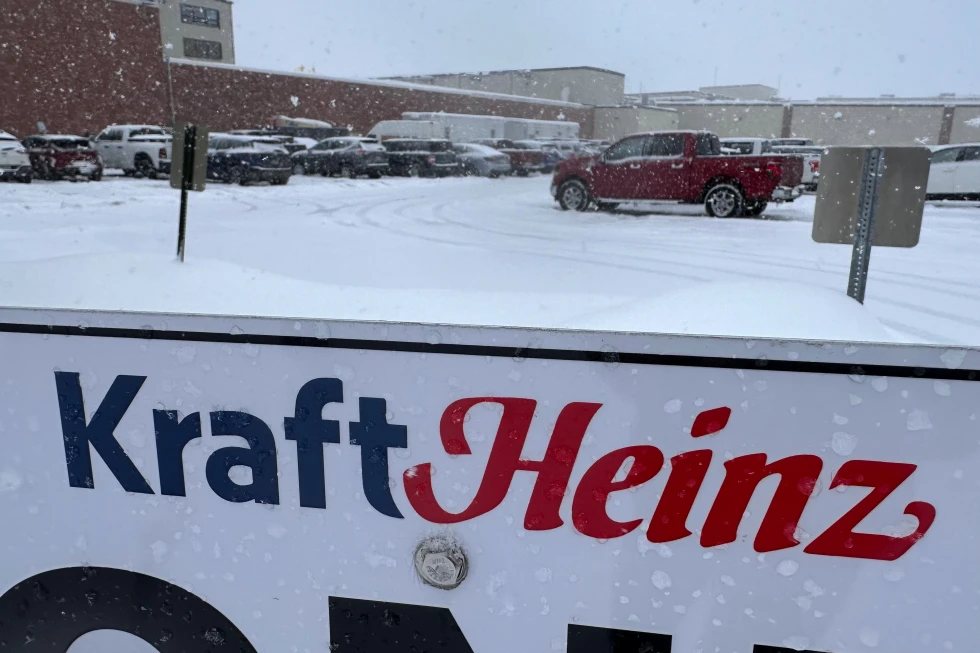
On Wednesday, Kraft Heinz said it was putting its plans to split into two entities on hold.
Steve Cahillane, who used to be the CEO of Kellogg Co. and is now the CEO of Kraft Heinz, said he wants to make sure that all of the company's resources are used to help it develop profitably.
Cahillane said in a statement, "I have seen that the opportunity is bigger than I thought and that many of our problems can be fixed and are under our control."
As Kraft Heinz released lower quarterly and yearly earnings, the company's shares stayed the same in the morning on Wednesday. Robert Moskow, an analyst at TD Cowen, wrote in a research note that investors are probably worried that Kraft Heinz thinks its companies aren't strong enough to stand on their own.
In September, Kraft Heinz said it was splitting into two firms. This was ten years after the brands merged to form one of the largest food companies in the world.
One of the corporations would have brands that sell better, such Kraft Mac & Cheese, Philadelphia cream cheese, and Heinz. The other group would have brands that don't sell as well, such Maxwell House, Oscar Mayer, Kraft Singles, and Lunchables.
Kraft Heinz indicated at the time that it thought the separation would be done by the end of current year. In December, the business hired Cahillane, who had already overseen a similar separation at Kellogg Co. in 2023.
But on Wednesday, Kraft Heinz said it will change its mind about the split and put $600 million into Business, sales, and product development.
"We are confident in the opportunity ahead and believe this investment will speed up our return to profitable growth," Cahillane said.
Kraft Heinz stated on Wednesday that its net sales declined by 3% to $6.35 billion from October to December. According to analysts polled by FactSet, that was less than the $6.37 billion that Wall Street expected. Sales went down 5% in North America but up in other parts of the world.
In the fourth quarter, Kraft Heinz's net income dropped 69.5% to $651 million. After taking out one-time costs, the company made 67 cents per share, which was more than the 61 cents that experts had predicted.
In 2013, billionaire businessman Warren Buffett and Brazilian investment firm 3G Capital bought H.J. Heinz Co. This was the start of the merging of Kraft and Heinz. At the time, the $23 billion purchase was the biggest in the food business.
Kraft Heinz intended to make the most of its huge size as a single corporation. But changing tastes made those goals harder to carry out. Families wanted less processed foods and switched to cheaper store brands.
Since 2020, when sales went up because of the pandemic, Kraft Heinz's net revenue has gone down every year. In April, Kraft Heinz decreased its full-year sales and profitability expectations because customers in the U.S. were spending less and President Donald Trump's tariffs had an effect.
Buffett added that over the years, he had come to understand that the company's competitive moat around its brands wasn't as solid as he had imagined. Last spring, two people from Buffett's investment company, Berkshire Hathaway, left the Kraft Heinz board. Later, Berkshire wrote out $3.76 billion on its Kraft Heinz investment. Buffett said he was not happy with Kraft Heinz's decision to break up into two companies.
Greg Abel, Buffett's successor at Berkshire, may now be trying to sell the company's whole investment. Kraft Heinz told investors in a regulatory filing at the end of last month that Berkshire Hathaway might want to sell its 325 million shares.