

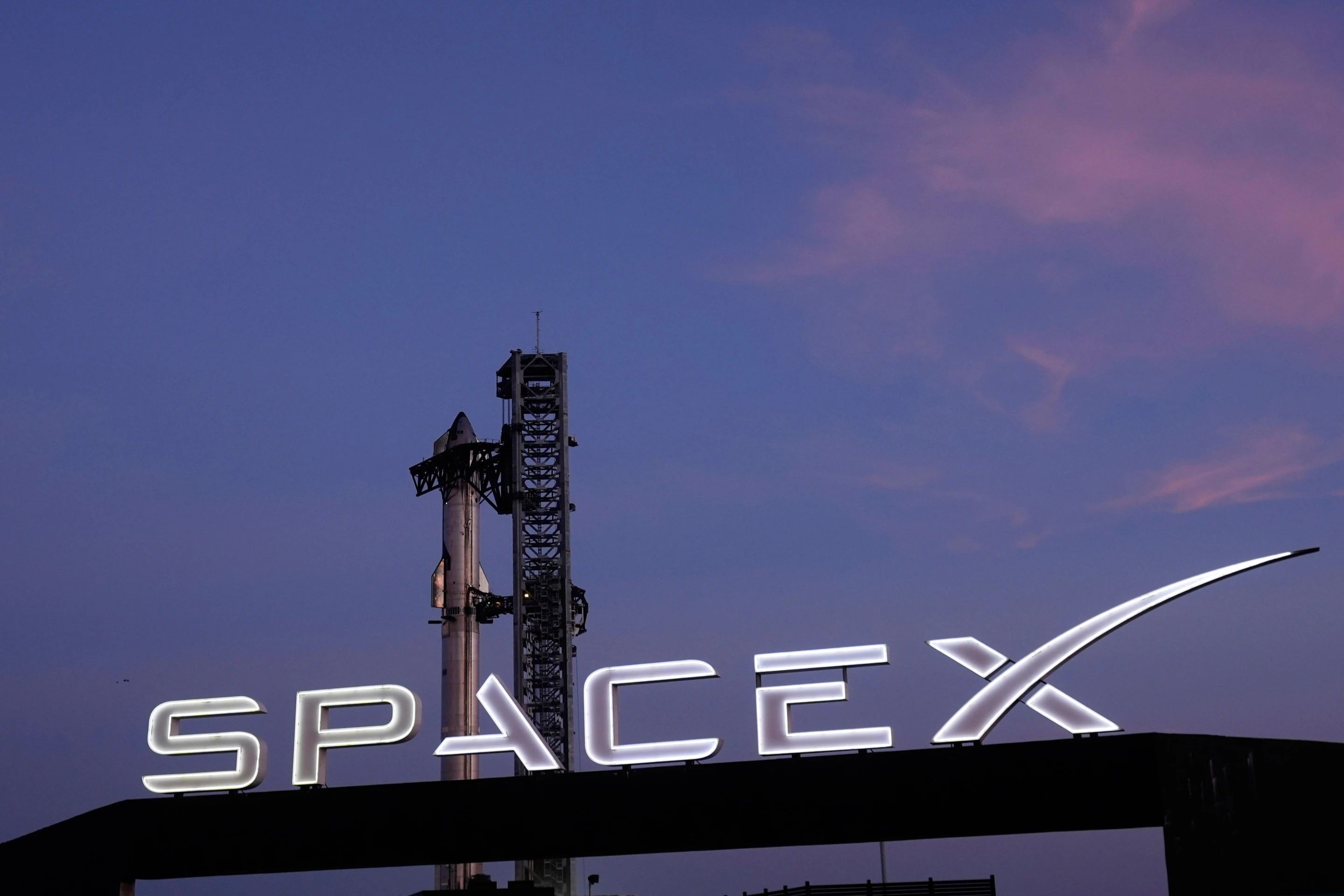
Elon Musk’s rocket business SpaceX will make its Wall Street debut Friday and both institutional and individual investors are anticipated to pick up the 555.6 million shares going up for sale at $135 apiece. Already the world’s richest man, Musk might become its first trillionaire.
Proceeds are expected to be about $75 billion, making SpaceX the biggest IPO ever. SpaceX wants to be the first business to take people to Mars. The truth is, part of Musk’s future remuneration hinges on SpaceX someday creating a colony of at least 1 million people on the red planet.
Why SpaceX is going public at this time In a video call on Musk’s social media platform X, he informed JPMorgan CEO Jamie Dimon that people have been telling him to take SpaceX public for the past 10 years. He's doing it now because the company expects to send 100,000 next-generation Starlink satellites into space. “It’s a massive new growth base and you need capital for that,” he said of deploying AI data centers in space.
An IPO would provide SpaceX with access to financing it needs. But it also opens it up to more shareholder scrutiny and regulatory control. This includes quarterly financial reporting, which critics argue incentivizes short-term thinking rather than planning for the longer term and produces unneeded costs for a company. Securities authorities are now asking public comments on a plan to force public corporations to publish financial reports only twice a year.
Impact of the IPO on the company Musk will have the majority of a special class of shares that will give him power over decisions about corporate strategy, finances and staff. On the latter, Musk owns most of these Class B shares, hence the only person who can fire Musk as CEO ... is Musk himself.
The corporation describes Musk as the “driving force” for its growth, innovation and success. But what if Musk is no longer in the picture? SpaceX warns that losing Musk might harm its “reputation and relationships with customers, partners and other stakeholders” and undermine its ability to execute its goals.
The business also warns that replacing Musk with someone possessing the same abilities and experience would be time demanding, if not nigh impossible. “SpaceX is Musk and Musk is SpaceX at the end of the day,” Wedbush Securities analyst Dan Ives wrote Wednesday.
Some significant investors are not pleased. Last month, officials from pension funds for firefighters, teachers and other workers in California and New York wrote SpaceX a letter condemning some of the provisions in its IPO, including the “super voting shares,” mandatory arbitration of shareholder claims rather than the possibility of lawsuits and how much power Musk will have over the company.
They said they may become owners of SpaceX stock because they own index funds that automatically purchase securities if they are added to certain indices.
The make-or-break for SpaceX The colossal, reusable Starship rocket is in the test phase and is vital to SpaceX accomplishing Musk’s dreams. A lot of the commercial space industry depends on SpaceX making Starship entirely reusable, and durable enough to have a short turnaround between flights. If not, SpaceX cautions, placing data centers and satellites in space will take longer and cost more money, meaning it risks consumers leaving on the firm.
Analysts think SpaceX has a clear edge over rivals like as Blue Origin, founded by Amazon's Jeff Bezos, in pioneering reusable rockets. The Starlink satellite firm faces competition from others, such as AST SpaceMobile, which is counting on a SpaceX rocket to launch its current generation of satellites into orbit next week.
The prospectus released last week states that the largest potential market for SpaceX is in selling business-oriented artificial intelligence technologies intended to change the way people get work done. SpaceX estimates it could address a $22.7 trillion market if it could somehow dominate rivals such as Anthropic, OpenAI and Microsoft in a hyper-competitive business. But the prospectus doesn't lay out a clear route to profitability for the xAI firm, which merged with SpaceX earlier this year.
The reason Wall Street is paying heed If the SpaceX IPO is similarly successful, the stock might soon be joining the Nasdaq 100, a well watched index that measures the 100 largest non-financial businesses in the country. That’s crucial because certain popular ETFs, like the $460 billion QQQ exchange-traded fund, track the index and will automatically buy whatever is in the index.
Nasdaq has amended its regulations to allow some companies to join the Nasdaq 100 after only 15 trading days.
Meanwhile, S&P Dow Jones Indices is sticking to tried and true limits that won’t allow firms with gigantic IPOs, such as SpaceX, faster admission into its S&P 500 index. Even high-profile companies will still have to wait a full 12 months before their stocks may begin trading in the index.
The reason companies want to be in the S&P 500 in particular is because it’s perhaps the most important index on Wall Street and trillions of dollars either mimics it exactly or is benchmarked against it. Consider the Vanguard VOO fund, for example, which tracks the S&P 500 and has around $950 billion in it.