


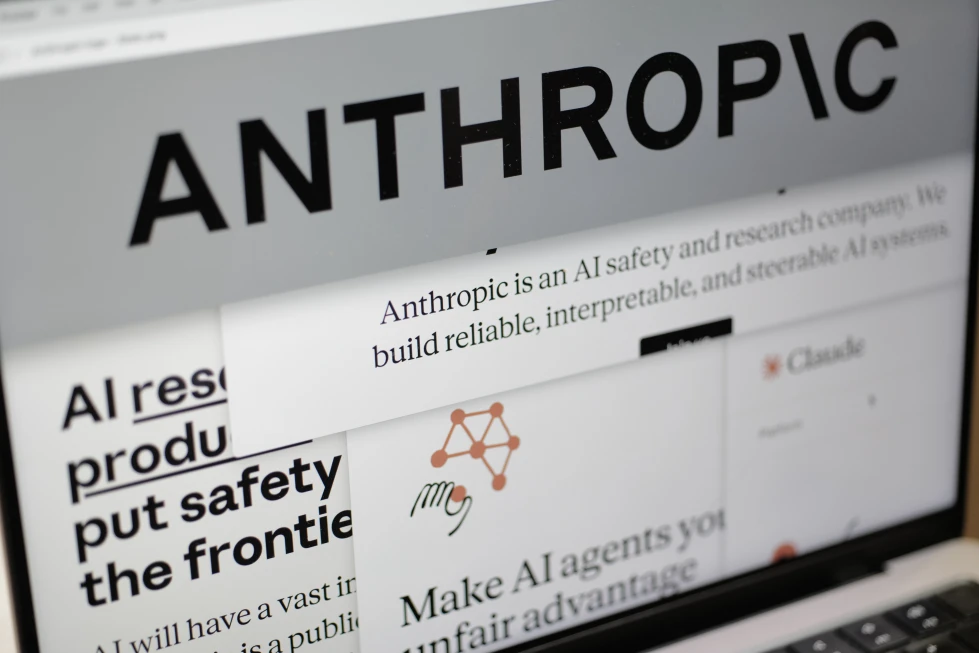
Anthropic, an artificial intelligence startup, is set to debut on Wall Street, the latest step in its rapid development from a little-known research lab to one of the leading AI companies with a valuation of $965 billion.
Anthropic said Monday it has filed a confidential registration statement with the U.S. Securities and Exchange Commission in connection with a potential initial public offering of its common stock.
“This provides us with the opportunity to go public once the SEC completes its review,” Anthropic said in a brief statement. The proposed initial public offering is subject to market and other conditions.
The business stated it had not decided on the amount or price of the shares to be offered.
Anthropic claimed this week it had raised $65 billion in private capital that will increase its valuation to $965 billion, a staggering sum that makes the five-year-old manufacturer of the Claude chatbot one of the world’s most valuable firms.
The firm behind ChatGPT, OpenAI, currently lags its biggest opponent, Anthropic, not only in market value and reported income, but also in its road toward becoming a public business.
“I think we were all expecting OpenAI to go first so it was a little bit surprising,” said Patrick Corrigan, a law professor at Notre Dame University who researches IPOs. “Public investors are going to be comparing them roughly around the same time, and so there appears to be a bit of a first movers’ advantage here.”
Anthropic said it is currently generating $47 billion in annum income selling its technology to people and organizations who use Claude to create code and do other work and personal duties on their behalf.
Anthropic, which was founded in 2021 by former OpenAI officials, is projected, along with Elon Musk’s rocket and AI company SpaceX, to become publicly traded, as will both AI companies. All three have been burning more cash than they are earning, fuelling fears of an AI bubble.
Anthropic’s decision is a big step for the business to go ahead of OpenAI and “an opening of the floodgates for the IPO market, which has been relatively dormant for a few years, with these three major conglomerates set to go public later this year,” Wedbush Securities analyst Dan Ives told CNBC.
“The race between Anthropic, OpenAI and SpaceX is in some ways like the rush of startups to go public in the early internet era,” said Corrigan. Some of those companies — like Amazon — performed well, and some infamously flopped during the dot-com disaster, but nevertheless left new technologies that revolutionized society and work life.
“When there’s speculation there’s usually substance, there’s usually fundamentals,” Corrigan added. “The question here is whether the price investors are going to end up paying is going to match up to the substance and fundamentals of what AI is really going to do in the real economy and as a business,” he said.
While OpenAI was the first to make the name of its AI, ChatGPT, a household name, sparking a commercial AI boom, the growing popularity of Claude has left them playing catch-up. Anthropic also released its latest AI model, named Claude Opus 4.8, last week, which it said is even better at coding and other professional activities than earlier models.
The latest from March said it was on track to be valued at $852 billion after financing $122 billion. It has yet to report filing initial IPO filings with the SEC.
SpaceX was valued at $800 billion last year, but the value went up to $1.25 trillion after the space exploration business combined with Musk’s xAI in February. Musk recently disclosed plans for one of the biggest stock sales ever, and will be ready to pitch the offering to investors as soon as this week.
“It’s a healthy thing for the AI industry when these companies have to report earnings quarterly and expose some of their technology investments,” said IDC analyst Tim Law.
“We think of these organizations as very mature, but they have had to mature in very short order,” he remarked.
On the bubble fears, Law, who rode the dot-com IPO wave while working for internet company VerticalNet in the early part of the century, said there’s evidence from these AI startups’ existing products to show they are on a path not just to profitability but to artificial general intelligence, technology that does work as well as or better than humans.
“On demand there are some cynics out there. "I really think there is a market for it and it will only get bigger," Law added. “I think this round of funding might be the thing that lets us finish the last sprint to AGI.”